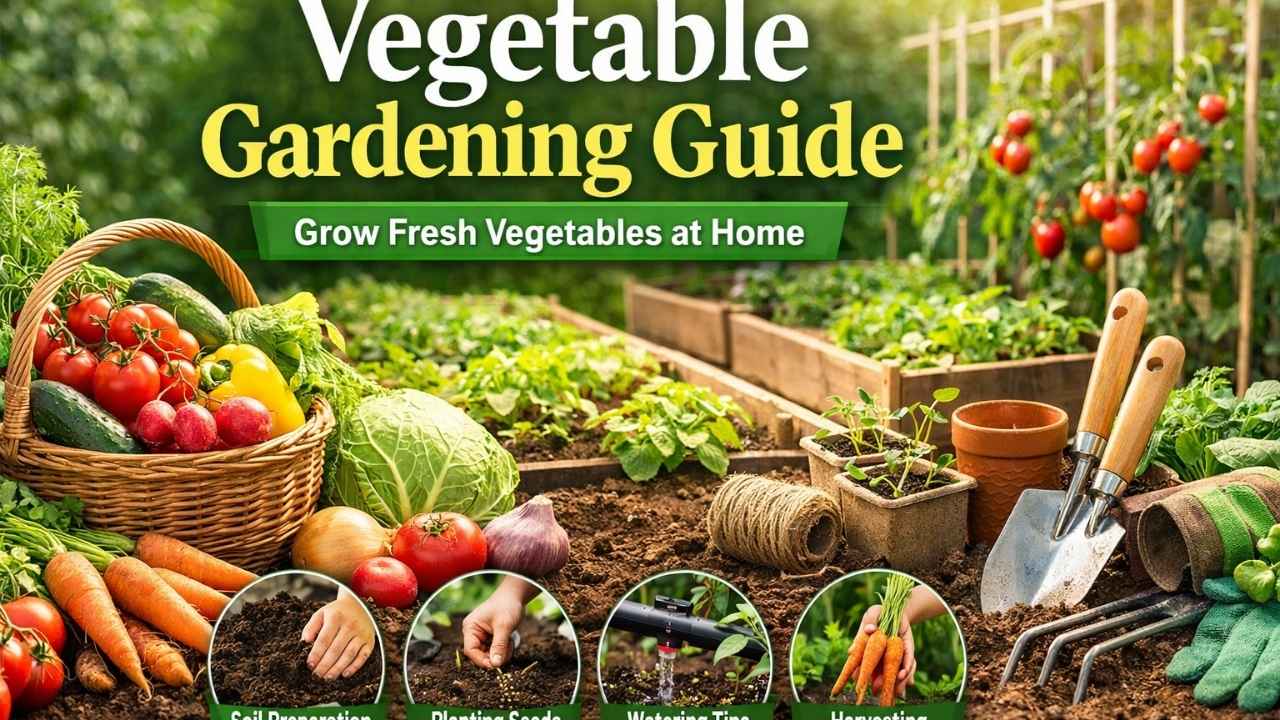
Vegetable gardening is the practice of growing edible plants such as leafy greens, roots, fruits, and legumes for personal consumption or small-scale production. According to agricultural studies, home vegetable gardening has increased worldwide because it helps reduce food costs, improves nutrition, and allows people to consume fresh, chemical-free produce. Even a small garden can produce a significant amount of vegetables year-round when planned correctly.
In many regions, vegetable gardening is done in backyards, terraces, balconies, or community plots. With proper soil preparation, sunlight, watering, and seasonal planning, vegetables can be grown in almost any climate. Modern techniques such as container gardening, raised beds, and drip irrigation have made it easier for beginners to start gardening even without large land areas.
Vegetable gardening also plays an important role in sustainable living. Growing food at home reduces dependence on packaged produce, lowers transportation costs, and supports environmentally friendly practices. Understanding plant types, seasons, soil quality, and care methods is essential for successful vegetable production.
Types of Vegetable Gardening
Vegetable gardening can be done in different ways depending on available space, climate, and personal preference. Each method has its own advantages and is suitable for different environments.
1. Backyard Gardening
This is the most common method, in which vegetables are grown directly in soil in open ground. It allows large production and supports many types of plants.
2. Container Gardening
Vegetables are grown in pots, buckets, or grow bags. This method is suitable for small homes, balconies, and terraces. Tomatoes, chilies, spinach, and herbs grow well in containers.
3. Raised Bed Gardening
Raised beds are soil beds built above ground level using wood, bricks, or metal frames. They improve drainage, enhance soil quality, and reduce weed growth.
4. Vertical Gardening
Plants are grown upward using supports, walls, or hanging systems. This method saves space and is useful for urban gardening.
Common Vegetables and Their Growing Conditions
Different vegetables need different temperatures, sunlight, and soil conditions. Understanding these requirements helps in planning the garden properly.
| Vegetable | Ideal Temperature | Sunlight Needed | Growing Season |
|---|---|---|---|
| Tomato | 20–30°C | Full sun | Summer / Spring |
| Spinach | 10–20°C | Partial sun | Winter |
| Carrot | 15–25°C | Full sun | Winter / Spring |
| Potato | 15–22°C | Full sun | Winter / Spring |
| Cabbage | 12–20°C | Full sun | Winter |
| Chili | 20–30°C | Full sun | Summer |
| Onion | 13–24°C | Full sun | Winter / Spring |
Vegetables are usually divided into cool-season crops (spinach, cabbage, carrots) and warm-season crops (tomatoes, chilies, cucumbers). Planting according to season improves yield and reduces plant disease.
Soil Preparation for Vegetable Gardening
Good soil is the most important factor in successful vegetable gardening. Plants need soil that provides nutrients, water, and air for roots.
Before planting, the soil should be loosened to allow proper root growth. Removing stones, weeds, and old roots helps prevent disease. Adding organic matter such as compost or manure improves soil fertility and water retention.
Healthy garden soil should have the following qualities:
- Well-drained but able to hold moisture
- Rich in organic matter
- Slightly loose and soft
- Neutral to slightly acidic pH (6.0–7.0)
Regular compost addition keeps the soil fertile for long-term vegetable production.
Basic Tools Required for Vegetable Gardening
Vegetable gardening does not require expensive equipment, but some basic tools make the work easier and more efficient.
- Hand trowel for digging and planting
- Garden hoe for removing weeds
- Watering can or hose for irrigation
- Pruning scissors for cutting plants
- Garden fork for loosening soil
- Gloves for hand protection
Using proper tools reduces effort and prevents damage to plants.
Watering and Irrigation Methods
Vegetables need regular watering, but too much water can damage roots. Proper irrigation depends on soil type, weather, and plant stage.
| Method | Description | Advantage | Limitation |
|---|---|---|---|
| Hand watering | Using a can or a hose | Simple and low cost | Time-consuming |
| Drip irrigation | Water is delivered slowly to the roots | Saves water | Installation cost |
| Sprinkler system | Water sprayed over plants | Covers a large area | Can waste water |
| Soaker hose | Slow watering along soil | Good for beds | Needs setup |
Young plants need more frequent watering, while mature plants need deeper but less frequent watering.
Fertilizers and Nutrient Management
Vegetables require nutrients such as nitrogen, phosphorus, and potassium for proper growth. These nutrients can be supplied through organic or chemical fertilizers.
Organic fertilizers include compost, cow manure, vermicompost, and plant waste. They improve soil health and are safe for long-term use. Chemical fertilizers provide quick nutrients but should be used carefully.
Balanced fertilization helps in:
- Strong root development
- Healthy leaves
- Better fruit production
- Disease resistance
Applying fertilizer at the correct time is important, especially during planting and flowering stages.
Pest and Disease Control in Vegetable Gardens
Pests and plant diseases can reduce vegetable production if not controlled. Common pests include insects, worms, and fungal infections.
Natural control methods are preferred in home gardening. Neem oil spray, soap solution, and removing infected leaves help protect plants without harmful chemicals.
Good gardening practices to prevent disease include:
- Proper spacing between plants
- Clean tools and soil
- Removing dead leaves
- Avoiding overwatering
- Crop rotation each season
Healthy plants are less likely to get infected, so proper care is the best prevention.
Seasonal Planning for Vegetable Gardening
Planting vegetables according to season ensures better growth and higher yield. Each climate has different planting months, but general planning can be followed.
| Season | Suitable Vegetables |
|---|---|
| Winter | Spinach, cabbage, carrot, onion, peas |
| Summer | Tomato, chili, cucumber, beans |
| Rainy season | Okra, gourds, pumpkin |
| Spring | Potato, lettuce, radish |
Planning the garden before the season starts helps in buying seeds, preparing soil, and arranging watering systems.
Benefits of Vegetable Gardening
Vegetable gardening provides many practical advantages beyond food production. Fresh vegetables contain more nutrients compared to stored produce, and home gardening reduces the use of chemicals.
It also helps reduce household expenses, especially when growing commonly used vegetables. Gardening is also considered a healthy physical activity because it involves digging, watering, and caring for plants.
Environmental benefits include reduced waste, better soil health, and less use of plastic packaging. Many people also find gardening relaxing and helpful for mental well-being.