Healthy weight gain is an important goal for people who are underweight, recovering from illness, or trying to build muscle mass. According to health guidelines, weight gain should be gradual, achieved by increasing calorie intake and improving nutritional quality rather than by consuming unhealthy foods. A balanced approach helps increase body weight while maintaining overall health.
The human body needs extra calories to gain weight. On average, gaining 0.5 kg per week requires about 500 additional calories per day above maintenance needs. However, weight gain should not come only from fats or sugar. Proper weight gain includes muscle growth, improved strength, and better energy levels.
Scientific studies show that combining high-calorie foods, strength training, and proper sleep produces the best results. People who try to gain weight without proper planning often gain fat instead of muscle, which may increase health risks. Therefore, following structured weight-gain tips is necessary for achieving safe and effective results.
Understanding How Weight Gain Works
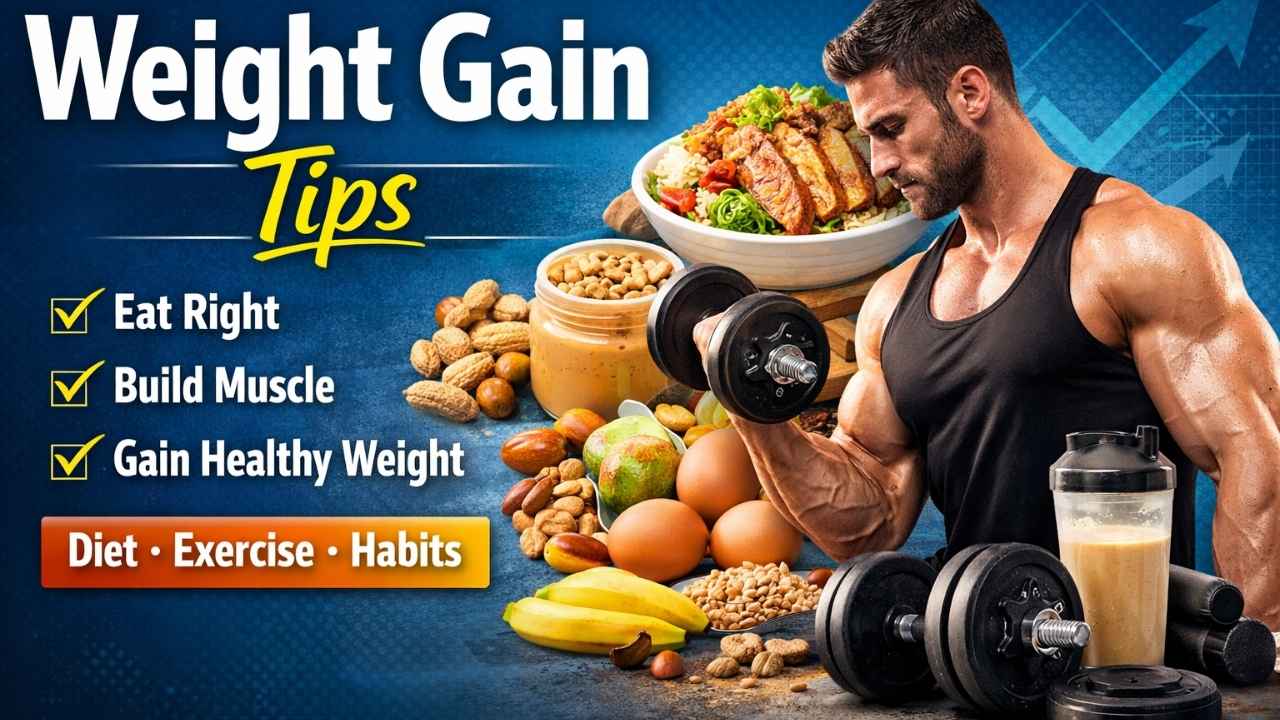
Weight gain occurs when calorie intake exceeds calorie use. The body stores extra energy as muscle or fat, depending on diet and physical activity. If the extra calories come from protein-rich, nutritious foods and exercise, the body builds muscle mass.
Metabolism also plays an important role. People with fast metabolism burn calories quickly and may need more food to gain weight. Age, gender, hormones, and physical activity level also affect how fast a person gains weight.
Weight gain should always be gradual. Rapid weight gain from junk food may increase cholesterol, blood sugar, and body fat percentage. Healthy weight gain focuses on strength, stamina, and proper nutrition rather than simply increasing body weight.
Daily Calorie Needs for Weight Gain
The number of calories required depends on body weight, height, age, and activity level. The table below shows an approximate calorie increase needed for gradual weight gain.
| Body Type | Maintenance Calories | Calories for Weight Gain | Expected Gain |
|---|---|---|---|
| Low-weight male | 2000–2200 | 2500–2700 | 0.4–0.5 kg/week |
| Low-weight female | 1600–1800 | 2000–2200 | 0.3–0.4 kg/week |
| Active male | 2400–2600 | 2900–3100 | 0.5 kg/week |
| Active female | 2000–2200 | 2400–2600 | 0.4 kg/week |
These values are general estimates. Individual requirements may vary depending on metabolism and activity.
Best Foods for Healthy Weight Gain
Food quality matters more than food quantity. High-calorie foods should also contain protein, carbohydrates, vitamins, and healthy fats.
Some foods help increase weight safely because they provide both energy and nutrients.
Recommended Foods for Weight Gain
- Milk and dairy products such as cheese, paneer, and yogurt
- Eggs, chicken, fish, and meat for protein
- Rice, potatoes, oats, and whole grains for carbohydrates
- Nuts, peanut butter, almonds, and seeds for healthy fats
- Bananas, mangoes, and dried fruits for extra calories
- Lentils, beans, and soy products for plant protein
Eating these foods regularly helps increase body weight without harming health.
Sample High-Calorie Meal Plan
A structured meal plan helps ensure that the body receives enough nutrients throughout the day. Eating 5–6 meals daily is often recommended for weight gain.
| Meal Time | Example Foods | Purpose |
|---|---|---|
| Breakfast | Milk, eggs, toast, banana | Energy for the day |
| Mid-morning | Nuts, fruit shake | Extra calories |
| Lunch | Rice, dal, vegetables, chicken | Balanced nutrition |
| Evening snack | Peanut butter sandwich, milk | Protein and fats |
| Dinner | Chapati, paneer, vegetables | Muscle recovery |
| Before sleep | Milk or yogurt | Overnight nutrition |
Frequent meals help people with low appetites consume more calories without discomfort.
Role of Exercise in Weight Gain
Exercise is necessary for gaining a healthy weight. Without exercise, extra calories are stored as fat instead of muscle. Strength training increases muscle mass and improves body shape.
Weight training stimulates muscle fibers, which grow stronger when the body receives enough protein and calories. Exercises such as squats, push-ups, bench press, and deadlift are effective for muscle growth.
Regular exercise also improves appetite, making it easier to eat more. People who combine diet and exercise usually gain weight faster than those who only increase food intake.
Habits That Help in Faster Weight Gain
Healthy habits support weight gain. Small lifestyle changes can make a big difference over time.
- Eat every 3–4 hours to maintain calorie intake
- Drink milk, shakes, or smoothies instead of only water sometimes
- Sleep at least 7–8 hours daily for muscle recovery
- Avoid skipping meals
- Reduce stress because stress reduces appetite
Consistency is important. Weight gain takes time, and regular habits help maintain progress.
Common Mistakes During Weight Gain
Many people try to gain weight quickly, making mistakes that affect their health. Eating only junk food, skipping exercise, or using supplements without guidance may cause problems.
Some people eat large meals only once or twice a day instead of eating frequently. Others do not eat enough protein, which prevents muscle growth. Lack of sleep and high stress also slow down weight gain.
Healthy weight gain should always focus on nutrition, exercise, and proper rest instead of shortcuts.