Flower plants are one of the most diverse groups in the plant kingdom. Scientifically known as angiosperms, these plants produce flowers as their reproductive structure and form seeds enclosed within fruits. According to botanical classification, more than 300,000 species of flowering plants have been identified worldwide, making them the largest group of land plants on Earth.
Flowering plants play an essential role in ecosystems, agriculture, medicine, and human culture. They help in pollination, oxygen production, soil conservation, food supply, and biodiversity support. Many crops, fruits, vegetables, and ornamental plants belong to this category, which makes them highly valuable for both environmental and economic purposes.
From small seasonal flowers to large trees that produce blossoms, flowering plants exist in almost every climate zone. They can grow in tropical, temperate, desert, and cold regions, showing their strong adaptability. Understanding different types of flower plants, their uses, and proper growing methods helps gardeners, farmers, and plant lovers maintain healthy plants.
What Are Flower Plants (Angiosperms)
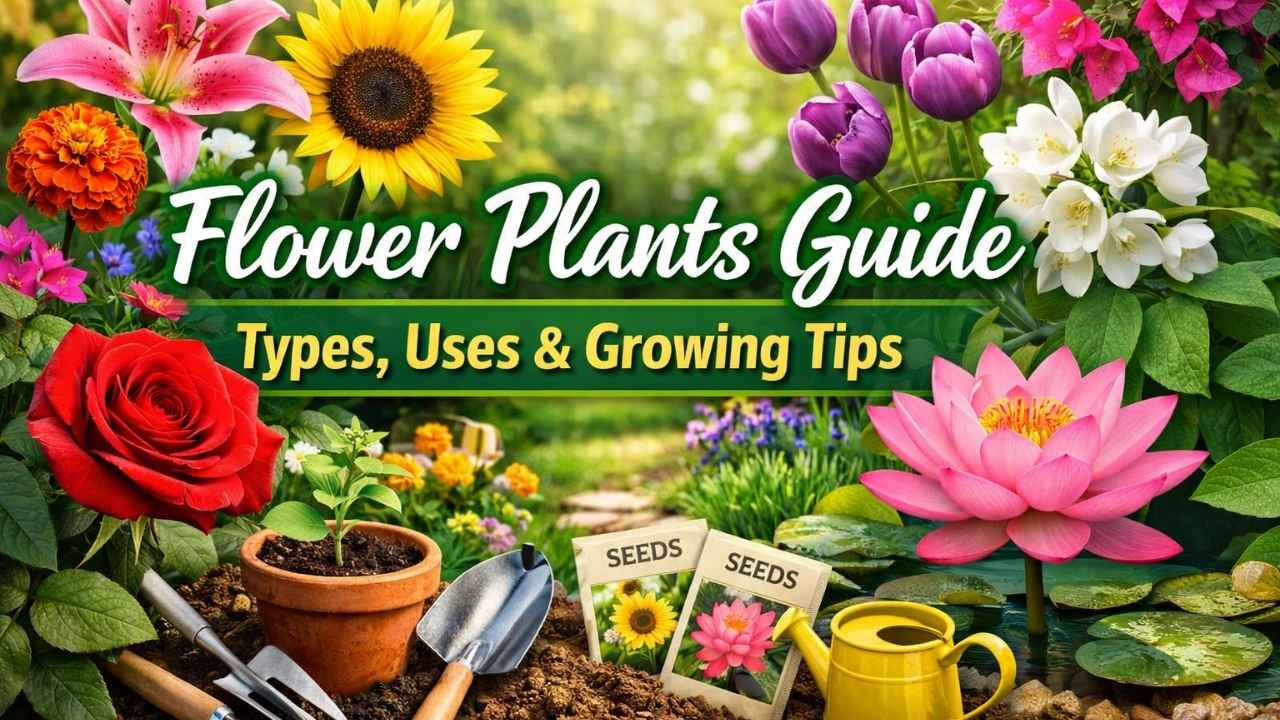
Flower plants reproduce through flowers and seeds. The flower is the reproductive organ that contains male and female parts, allowing pollination and fertilization.
The basic parts of a flower plant include roots, stem, leaves, flowers, fruits, and seeds. Each part performs a specific function that supports the plant’s life cycle.
Flowering plants are divided into two main categories based on seed structure.
| Category | Scientific Name | Characteristics | Examples |
|---|---|---|---|
| Monocot | Monocotyledons | One seed leaf, parallel veins | Lily, Orchid, Grass |
| Dicot | Dicotyledons | Two seed leaves, branched veins | Rose, Sunflower, Pea |
Monocots usually have long leaves with parallel veins, while dicots have wider leaves with branching veins.
Common Types of Flower Plants
Flower plants can be classified by lifespan, growth pattern, and use. This classification helps in gardening and agricultural planning.
1. Annual Flower Plants
Annual plants complete their life cycle in one season. They grow, produce flowers, make seeds, and die within one year.
Examples include marigold, petunia, zinnia, and sunflower. These plants are popular in home gardens because they grow quickly and produce many flowers.
2. Biennial Flower Plants
Biennial plants take two years to complete their life cycle. In the first year, they grow leaves and roots, and in the second year, they produce flowers and seeds.
Examples include foxglove and hollyhock.
3. Perennial Flower Plants
Perennial plants live for many years and produce flowers repeatedly. These plants are common in parks, gardens, and landscapes.
Examples include rose, hibiscus, jasmine, and lotus.
4. Flowering Trees and Shrubs
Some large plants and trees also produce flowers. These plants are used for decoration, shade, and fruit production.
Examples include gulmohar, magnolia, cherry blossom, and bougainvillea.
Popular Flower Plants and Their Features
| Flower Name | Plant Type | Climate | Main Use |
|---|---|---|---|
| Rose | Perennial | Temperate | Decoration, perfume |
| Sunflower | Annual | Warm | Oil, seeds, decoration |
| Lotus | Aquatic | Tropical | Religious, decoration |
| Lily | Bulb plant | Mild | Garden decoration |
| Marigold | Annual | Warm | Festivals, gardening |
| Jasmine | Shrub | Tropical | Perfume, decoration |
| Tulip | Bulb plant | Cold | Ornamental |
| Hibiscus | Perennial | Tropical | Medicine, decoration |
Different flowers require different soil, water, and sunlight conditions.
Importance of Flower Plants in Nature
Flower plants are very important for the environment. They support life in many ways and help maintain ecological balance.
- They produce oxygen through photosynthesis
- They provide food for insects, birds, and animals
- They help in pollination and seed formation
- They improve soil quality
- They control air pollution
Flowers also attract bees and butterflies, which are important for crop production.
Uses of Flower Plants in Human Life
Flower plants are not only decorative but also useful in many industries. They are used in food, medicine, cosmetics, and agriculture.
Main uses of flower plants
- Decoration in homes, parks, and temples
- Production of perfumes and oils
- Use in herbal medicines
- Food production, such as fruits, vegetables, and spices
- Religious and cultural activities
- Honey production through beekeeping
Many medicines are made from flowering plants, including plants used in traditional and modern treatments.
Basic Conditions Required to Grow Flower Plants
Flower plants need proper care to grow healthy. Growth depends on soil, water, sunlight, and temperature.
Essential growing conditions
- Good quality soil with nutrients
- Proper sunlight for photosynthesis
- Regular watering but not too much
- Suitable temperature for the plant type
- Protection from pests and diseases
Some plants grow better in full sunlight, while others need shade.
Steps to Grow Flower Plants at Home
Growing flower plants at home is simple if proper steps are followed.
- Choose the right type of plant for your climate
- Use healthy seeds or saplings
- Prepare the soil with compost or fertilizer
- Plant at the correct depth
- Water regularly
- Keep plants in sunlight
- Remove weeds and dry leaves
- Protect from insects
Following these steps helps plants grow faster and produce more flowers.
Flower Plants and Pollination Process
Pollination is the process by which plants reproduce. It happens when pollen moves from the male part to the female part of the flower.
Pollination can occur in different ways:
- By insects like bees and butterflies
- By wind
- By birds
- By water
- By human activity
Without pollination, many fruits and seeds cannot form.