Outdoor plants play an essential role in improving the environment, maintaining ecological balance, and enhancing the beauty of residential and public spaces. These plants grow naturally in open environments where they receive sunlight, fresh air, and natural rainfall. According to horticulture studies, outdoor plants help reduce air pollution, regulate temperature, and support biodiversity by providing food and shelter to insects and birds.
Different types of outdoor plants are suitable for different climates, soil conditions, and purposes. Some plants are grown for decoration, some for shade, and others for fruits, flowers, or medicinal use. Choosing the right plant for outdoor spaces depends on sunlight exposure, water availability, and seasonal weather conditions.
Modern gardening trends show that outdoor planting has increased in urban areas, as people seek cleaner air and greener surroundings. Research in environmental science confirms that green spaces around homes can reduce heat levels, improve oxygen supply, and create a healthier living environment.
Types of Outdoor Plants
Outdoor plants can be classified by size, lifespan, and purpose. Understanding these categories helps in selecting the right plants for gardens, parks, and home surroundings.
1. Flowering Plants
Flowering plants are mainly grown for decorative purposes. They produce colorful flowers and attract butterflies and bees.
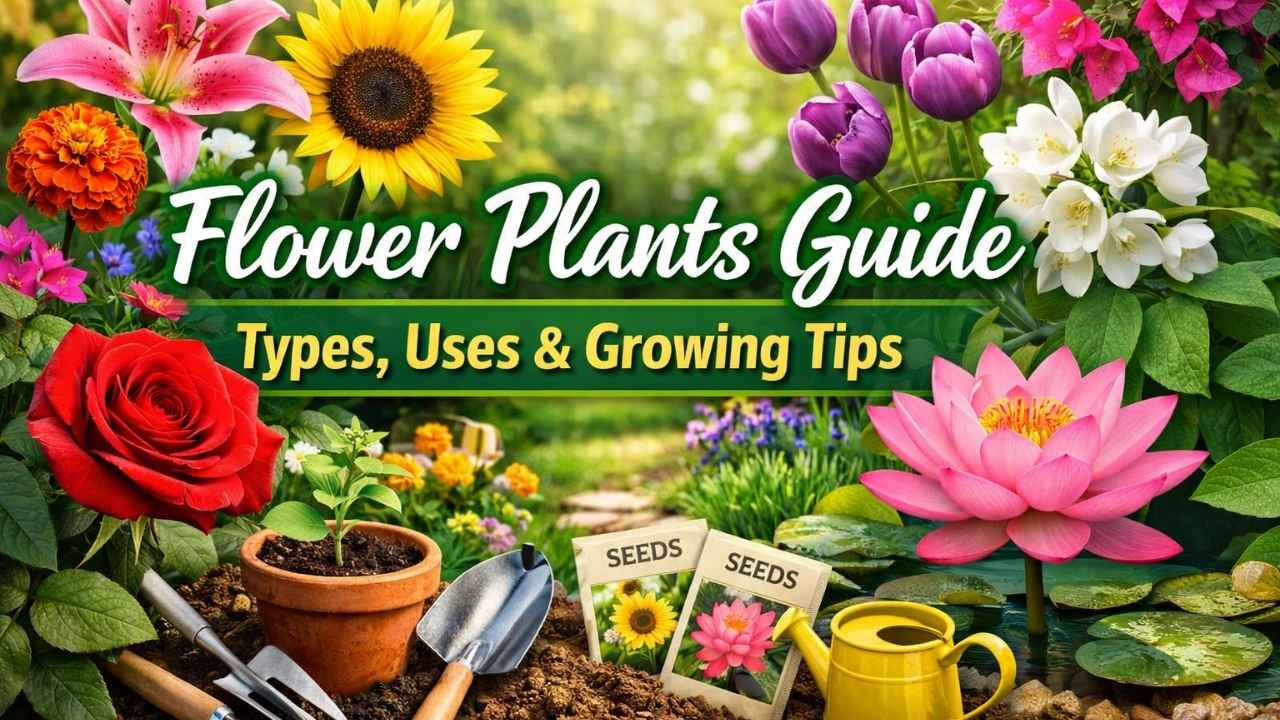
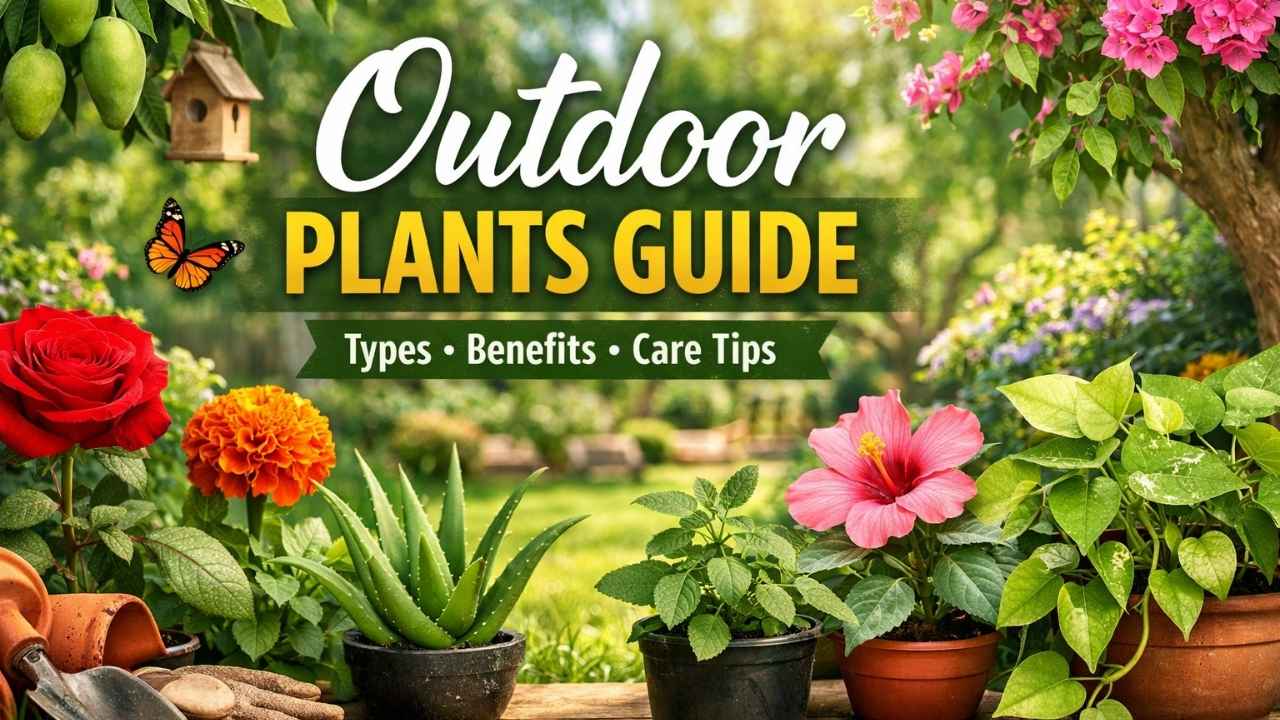
Examples include rose, hibiscus, marigold, sunflower, and jasmine. These plants usually need sunlight and regular watering to grow properly.
2. Shrubs
Shrubs are medium-sized plants with multiple stems. They are commonly used for borders and landscaping.
Examples include bougainvillea, croton, and ixora. Shrubs require moderate sunlight and trimming to maintain shape.
3. Trees
Trees are large outdoor plants that provide shade, fruits, and oxygen. They take more time to grow but live for many years.
Examples include neem, mango, banyan, and peepal. Trees need open space and deep soil for strong roots.
4. Climbers and Creepers
These plants spread along walls, fences, or the ground. They are often used to cover spaces naturally.
Examples include money plant, ivy, pumpkin, and grapevine. Climbers need support to grow upward.
Common Outdoor Plants and Their Uses
| Plant Name | Type | Main Use | Sunlight Requirement |
|---|---|---|---|
| Rose | Flowering plant | Decoration | Full sunlight |
| Neem | Tree | Medicinal, shade | Full sunlight |
| Hibiscus | Flowering shrub | Decoration, herbal use | Full sunlight |
| Tulsi | Herbal plant | Medicinal, religious | Partial sunlight |
| Aloe Vera | Succulent | Medicinal, skin care | Partial sunlight |
| Bougainvillea | Shrub/climber | Decoration | Full sunlight |
| Mango | Tree | Fruit | Full sunlight |
Outdoor plants should be selected based on climate suitability to ensure healthy growth.
Benefits of Growing Outdoor Plants
Outdoor plants provide many environmental and health benefits. Scientific studies show that green plants help maintain oxygen levels and reduce harmful air pollutants.
Main benefits include:
- Improve air quality by absorbing carbon dioxide
- Reduce heat around buildings
- Provide food for birds and insects
- Increase property beauty and value
- Help reduce stress and improve mood
- Support natural ecosystem balance
Gardening experts recommend having at least a few outdoor plants around homes to maintain a healthy environment.
Ideal Conditions for Outdoor Plant Growth
Outdoor plants grow best when the environment matches their natural requirements. Factors such as sunlight, soil, water, and temperature affect plant health.
| Condition | Requirement for Most Outdoor Plants |
|---|---|
| Sunlight | 4–8 hours daily |
| Soil type | Well-drained fertile soil |
| Water | Regular but not excessive |
| Temperature | 15°C – 35°C for most plants |
| Space | Enough room for roots and growth |
Different plants may need different conditions, so plant selection should be done carefully.
How to Take Care of Outdoor Plants
Proper care is necessary for the healthy growth of outdoor plants. Without regular maintenance, plants may stop growing or become weak.
Basic care steps
- Water plants regularly, depending on the weather
- Use good-quality soil or compost
- Remove dry leaves and weeds
- Provide sunlight according to plant type
- Use organic fertilizer for better growth
- Protect plants from pests and insects
Regular care improves plant life and keeps the garden healthy.
Best Outdoor Plants for Home Gardens
Some plants are easy to grow and suitable for beginners. These plants require less maintenance and can grow in most climates.
| Plant | Why is it good for a home garden |
|---|---|
| Rose | Beautiful flowers |
| Tulsi | Easy to grow, medicinal |
| Aloe Vera | Low maintenance |
| Hibiscus | Grows fast |
| Marigold | Good for decoration |
| Money Plant | Easy to maintain |
| Neem | Useful and long-lasting |
These plants are commonly recommended by gardening experts for home use.
Importance of Outdoor Plants for the Environment
Outdoor plants are necessary for maintaining ecological balance. Trees and plants absorb carbon dioxide and release oxygen, which is essential for life. Large plants also help reduce noise pollution and control soil erosion.
Urban planning studies show that areas with more plants have lower temperatures than those without greenery. This is why parks, gardens, and roadside trees are important for cities.
Outdoor plants also support wildlife. Birds, insects, and animals depend on plants for food and shelter, which helps maintain biodiversity.